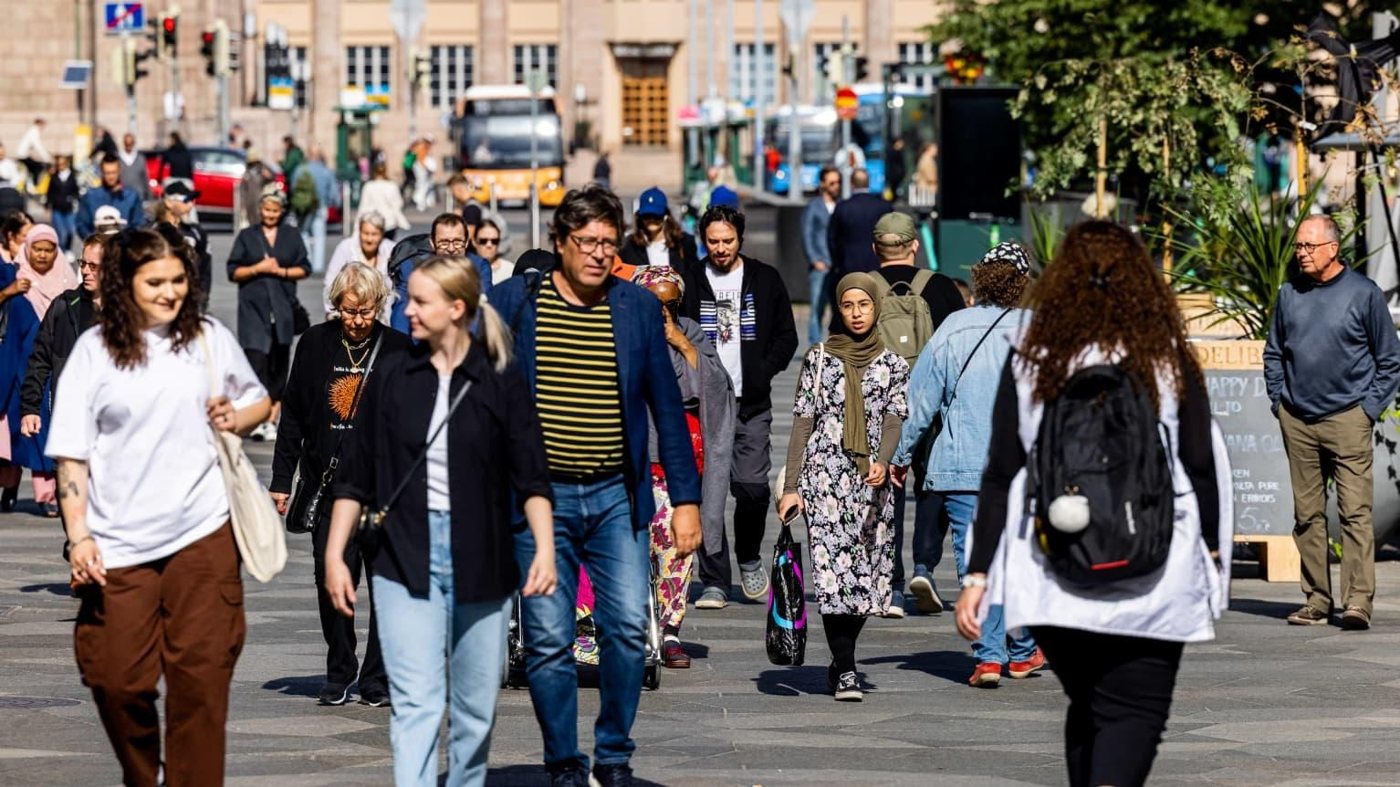
Finland is widely recognised for its commitment to equality, education, social welfare and human rights. These values are important foundations of Finnish society and contribute to the country's international reputation. However, a society's commitment to equality cannot be measured by its policies and principles alone. It must also be reflected in the everyday experiences of the people who live, work and contribute to it.
For many immigrants and people from diverse ethnic backgrounds, the experience of building a life in Finland can involve both opportunities and challenges. While Finland offers access to education, public services and a relatively strong social support system, racism and discrimination remain issues that deserve honest discussion and meaningful action.
The question is not simply whether Finland supports equality as a principle. It is whether everyone has a fair opportunity to experience that equality in practice.
Understanding the Reality of Racism in Finland
Racism is not always expressed through openly hostile behavior or direct insults. Sometimes it appears in subtle ways: assumptions about someone's abilities, unequal treatment, stereotypes, exclusion from social networks or repeated questioning of a person's qualifications and belonging.
These experiences can affect people in different areas of life, including employment, education, housing and access to services.
Research conducted by the Finnish Institute for Health and Welfare (THL) through its MoniSuomi study highlighted the scale of the issue. According to findings published by the Finnish Government in March 2024, 42 per cent of adults who had moved to Finland reported experiencing discrimination during the previous year. Among those who experienced discrimination, 75 per cent estimated that it was related to their origin, ethnicity or skin colour.
These findings demonstrate why discrimination cannot be treated as an isolated or insignificant issue. It requires attention from institutions, employers, policymakers and society as a whole. (Finnish Government, 2024)
Employment: Equality Must Begin with Equal Opportunities
Employment is one of the most important areas where inclusion becomes visible.
For many immigrants, finding employment is not simply about obtaining a job. It is also about having their education, professional experience and skills recognised.
Highly qualified immigrants may encounter barriers such as:
Difficulties in getting international qualifications recognised.
Language requirements that do not always reflect the actual demands of a position.
Limited professional networks and access to opportunities.
Recruitment practices influenced by unconscious bias or stereotypes.
Difficulties in gaining access to positions that match their education and experience.
These challenges can prevent talented individuals from contributing fully to Finnish society.
An inclusive labour market should recognise competence, experience and potential regardless of a person's name, nationality, ethnic background or place of education.
Employers have an important responsibility to examine recruitment practices, promote diverse workplaces and ensure that professional opportunities are accessible on fair terms.
Diversity should not simply be welcomed in organisational statements; it should be reflected in recruitment decisions, leadership, career development and workplace culture.
Beyond Policies: The Importance of Everyday Inclusion
Finland has taken steps towards addressing racism and promoting equality. In September 2024, the Finnish Government adopted an action plan containing 62 measures to combat racism and strengthen equality, with particular attention to working life and education.
This is an important policy commitment. However, the success of any action plan depends on its implementation and its impact on people's everyday lives. (Finnish Government, 2024)
Inclusion is not achieved simply because people from different backgrounds live in the same neighbourhood, attend the same schools or work in the same organisations.
Genuine inclusion means being welcomed, respected, heard and given the opportunity to participate.
It means that a person should not have to repeatedly prove their worth because of their background. It means that different languages, cultures, experiences and perspectives are recognised as contributions to society rather than obstacles to integration.
Communities become stronger when individuals feel that they belong and have a meaningful role in shaping their shared future.
The Role of Education and Community Organisations
Education is essential in preventing racism and building mutual understanding. Schools, universities and educational institutions can help challenge stereotypes, encourage critical thinking and create environments where diversity is respected.
However, responsibility should not rest with educational institutions alone.
Community organisations also play an important role in connecting people, creating safe spaces for dialogue and supporting individuals who may experience social isolation or discrimination.
Through community activities, awareness programmes, peer support and cooperation with local institutions, organisations can help strengthen trust and participation.
Such initiatives are particularly valuable for women, young people, families and newcomers who may face additional barriers to accessing information, services and social networks.
The work of civil society should be recognised as an essential part of building an inclusive society, not simply as an additional activity alongside public services.
From Integration to Participation
Integration is often discussed in terms of language learning, employment and adapting to a new society. These are important aspects of building a life in a new country.
However, integration should not be understood as a one-sided responsibility.
People who move to Finland are expected to learn, participate and contribute. At the same time, institutions, employers and communities must create fair opportunities for them to do so.
A truly inclusive society recognises that integration is a shared process.
It requires accessible information, fair employment practices, meaningful participation and opportunities for people from different backgrounds to contribute their knowledge and skills.
The goal should not be merely to help immigrants become part of society, but to ensure that society itself is open to their participation.
What Needs to Change?
Addressing racism requires more than awareness campaigns and public statements. It requires consistent action and accountability.
Some important steps include:
Fair recruitment practices: Employers should assess candidates based on relevant qualifications, skills and experience.
Recognition of international qualifications: Professional expertise gained abroad should be evaluated through transparent and accessible processes.
Stronger anti-racism education: Schools, workplaces and public institutions should actively address stereotypes and discrimination.
Accessible reporting and support: People experiencing discrimination should know where to seek assistance and feel safe reporting their experiences.
Support for community organisations: Civil society organisations need opportunities and resources to strengthen social inclusion and participation.
Meaningful representation: People from diverse backgrounds should have opportunities to participate in decision-making and leadership.
These actions can help move equality from a stated commitment towards a lived reality.
Building a Finland Where Everyone Belongs
Finland's future is shaped by everyone who lives, works, studies and contributes to its communities. Immigrants are not simply recipients of support or participants in integration programmes. They are professionals, parents, entrepreneurs, students, community leaders and active members of society.
Their knowledge, experiences and perspectives have value.
Discussing racism does not mean overlooking Finland's achievements or the progress made towards equality. Rather, it means recognising that a commitment to human rights also requires the courage to acknowledge existing challenges and address them.
A genuinely equal society is one in which opportunities are not determined by a person's background, and where belonging is not conditional on their name, appearance, language or origin.
Equality is not only about giving everyone the same rights. It is about ensuring that everyone has a genuine opportunity to exercise those rights, participate in society and be treated with dignity.
The future of an inclusive Finland depends not only on what its policies promise, but also on what its people experience every day.
References
- Finnish Government. (2024, March 21). Immigrants experience discrimination in Finland, especially based on their origin and ethnicity. Retrieved 21 March 2024, from valtioneuvosto.fi
- Finnish Government. (2024, September 5). Government approves action plan to combat racism and promote equality. Retrieved from valtioneuvosto.fi