


Finland has spent years debating whether immigrants are willing to integrate. The expectations are familiar: learn Finnish, obtain qualifications, find employment, become financially independent and contribute to society.
These are reasonable expectations. But they raise a question that receives far less attention: What responsibility does society have when immigrants make serious efforts to meet these expectations but still struggle to access professional opportunities?
The public conversation often focuses on what immigrants have failed to do. It is considerably less comfortable discussing what happens when they have invested years in education, language learning and professional development yet remain outside the labour market.
My recent interview with Helsingin Sanomat brought this contradiction into sharp focus.
I am a Finnish citizen of Pakistani origin. I hold a master’s degree in social work, have completed vocational education in Finland, passed the speaking component of the YKI examination at B2 level and gained practical experience in Finnish organisations.
I have also founded a registered association that creates opportunities for community participation, learning and inclusion.
Yet finding employment that reflects my education and experience has remained difficult.
I shared my experience publicly because I believe the employment of internationally educated professionals deserves a more serious discussion than it often receives.
The reactions revealed something equally important about the way integration is understood in Finland.
Integration is expected, but opportunity is not guaranteed
I arrived in Finland in 2020 with professional experience and a master’s degree in social work from the University of the Punjab.
Before moving to Finland, I had worked in social welfare services at Mayo Hospital in Lahore, Pakistan.
Like many internationally educated professionals, I discovered that rebuilding a career in another country requires much more than possessing a qualification.
I sought recognition of my degree, studied Finnish and completed additional vocational education.
I completed the Mielenterveys- ja päihdetyön ammattitutkinto (Further Vocational Qualification in Mental Health and Substance Abuse Work) at Omnia, developing my professional knowledge and practical skills in mental health and substance abuse work.
The Finnish National Agency for Education recognised the academic equivalence of my master’s degree. I also understood that academic recognition was not the same as professional authorisation to practise social work.
I continued developing my language skills and professional knowledge. I passed the speaking component of the YKI examination at B2 level.
In October 2026, I also passed all four parts of the entrance assessment for practical nurse education.
These were practical steps towards participation in Finnish working life.
I do not suggest that qualifications automatically entitle anyone to employment. Employers have legitimate requirements, and competition for jobs is real.
But when an internationally educated professional invests years in meeting local expectations, the discussion should not end with the observation that they remain unemployed.
We should also examine whether recruitment practices, professional recognition pathways and access to workplace experience allow people to use the skills they already possess.
Integration cannot be measured only by the efforts immigrants make. It must also be examined through the opportunities available to them.
The uncomfortable contradiction in the immigration debate
One of the recurring claims in immigration discussions is that immigrants are unwilling to work or become financially independent.
Yet when a qualified immigrant openly expresses the desire to work and considers moving abroad if suitable opportunities remain unavailable, that decision can also provoke hostility.
This is the contradiction I find difficult to reconcile.
If employment and financial independence are the goals, why should the pursuit of those goals elsewhere be treated as evidence of disloyalty?
Finnish professionals routinely consider international opportunities when their career prospects are limited. Their decisions are generally understood in terms of professional ambition, personal circumstances and economic opportunity.
An immigrant who has become a Finnish citizen should be entitled to make the same calculation.
My willingness to consider employment outside Finland is not a rejection of integration. It reflects my desire to use the education and experience I have acquired.
I am not interested in remaining professionally inactive when I have qualifications and the motivation to work.
Nor do I believe that immigrants should be expected to remain indefinitely in a labour market where they cannot establish a sustainable career.
Of course, different people express different opinions about immigration. Those who criticise unemployment are not necessarily the same individuals who criticise emigration.
Nevertheless, these arguments expose a wider problem: immigrants can find themselves judged negatively whether they remain unemployed, question employment barriers or decide to pursue opportunities elsewhere.
That is not a coherent approach to integration.
A short interview is not a professional assessment
Following my Helsingin Sanomat interview, some social media commenters questioned my Finnish-language skills.
I was nervous during the recording and did not express myself as naturally as I usually do. Speaking in front of a camera is different from participating in an ordinary conversation or working in a familiar environment.
I do not claim to speak flawless Finnish. I continue to develop my language skills, including the specialised vocabulary required in professional settings.
However, I have passed the speaking component of the YKI examination at B2 level. I have also completed the Mielenterveys- ja päihdetyön ammattitutkinto at Omnia and communicated in Finnish in educational and community environments.
A short interview cannot replace a proper assessment of those abilities.
There is a legitimate discussion to be had about language requirements in social work. Professionals must be able to understand clients, communicate accurately and meet the responsibilities of their positions.
Maintaining these standards is important.
But professional language proficiency should be assessed through relevant evidence, not assumptions based on an accent or a few nervous moments in front of a camera.
The distinction matters.
An accent is a feature of speech, not a reliable measure of professional knowledge. Grammatical mistakes do not automatically indicate an inability to perform a job. Equally, passing a language examination does not mean someone has mastered every form of professional communication.
Both realities can be acknowledged without dismissing a person’s competence.
If Finland expects immigrants to develop strong professional Finnish, workplaces must also be considered part of that development.
Language is not learned exclusively in classrooms. Professional fluency is strengthened through experience, interaction and responsibility.
A system that expects extensive workplace language competence while offering limited opportunities to acquire workplace experience risks creating a difficult cycle for internationally educated jobseekers.
When criticism shifts from competence to identity
The reaction to my interview was not limited to employment or language requirements.
Some comments questioned my religion, my Pakistani background and my decision to wear a hijab. Others suggested that I should return to my country of origin.
These comments raise a different issue.
Disagreement about someone’s professional qualifications is legitimate. Questioning whether a person belongs in society because of their religion or background is not the same thing.
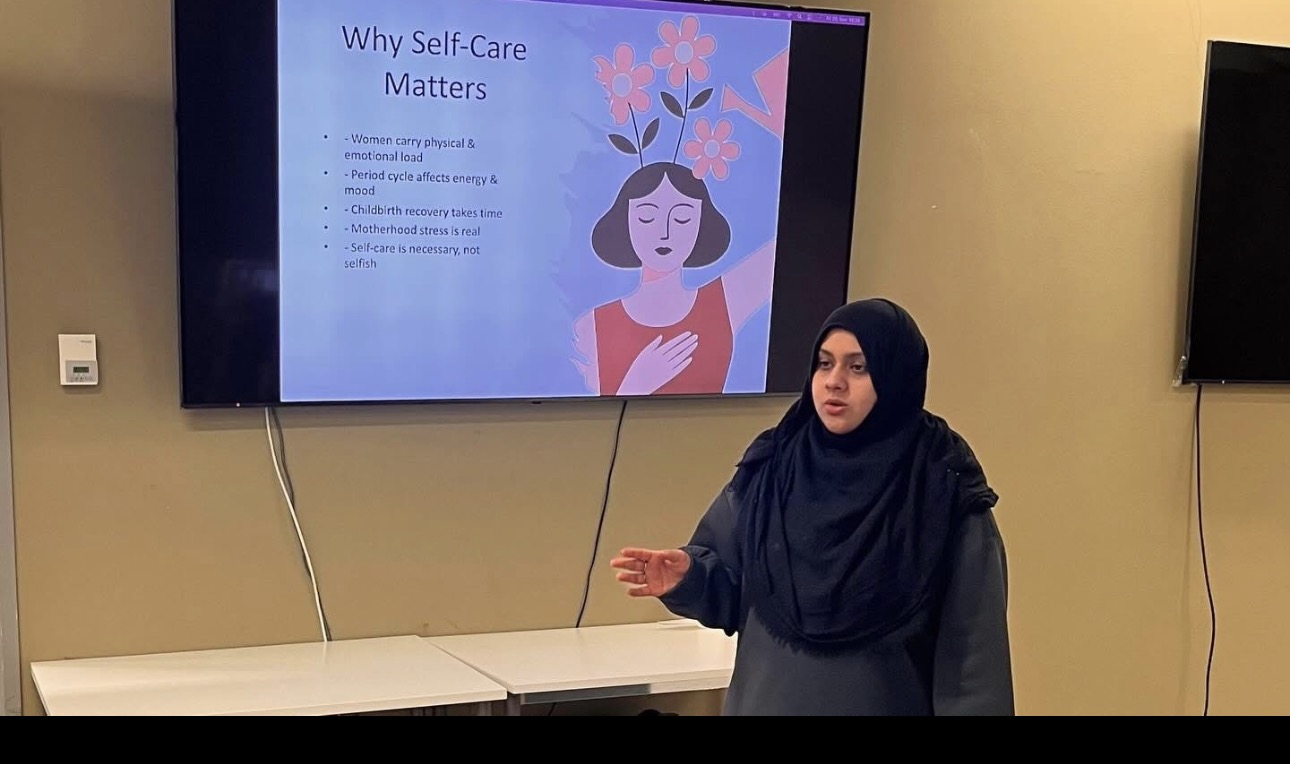
I am a Muslim woman who wears a hijab. I am also a Finnish citizen, a mother, a social work professional and the founder of a community organisation.
None of these identities cancels out the others.
My religious clothing does not determine my professional competence. My birthplace does not determine my commitment to Finnish society.
I should be assessed according to the requirements of the work I seek, just as any other applicant should be.
Racism is not limited to explicit hostility. It can also appear when assumptions about someone’s background influence how their abilities are interpreted.
A foreign accent may be treated as evidence of incompetence before a person’s qualifications are considered. A religious symbol may become the centre of attention in a discussion that should be about employment.
This does not mean every criticism directed at an immigrant is racist. It means criticism should be examined on its merits, and prejudice should not be disguised as an objective assessment of competence.
A fair society should be able to discuss professional standards without turning someone’s identity into a professional disadvantage.
The value of qualifications should not depend on where they were obtained
The recognition of international qualifications is another important part of this discussion.
My master’s degree was completed in Pakistan, and its academic equivalence has been recognised in Finland.
I understand that professional authorisation involves additional requirements. Different countries have different systems, legislation and expectations.
But recognising these differences should not lead to the assumption that education obtained outside Finland has no value.
International qualifications represent years of study and professional development. Many immigrants also bring experience from institutions, organisations and workplaces in their countries of origin.
This knowledge may need to be supplemented or adapted to the Finnish context.
That is different from dismissing it.
A more productive discussion would examine how internationally educated professionals can demonstrate their existing competencies, complete necessary supplementary requirements and access suitable professional pathways.
The question should not simply be whether a qualification was obtained in Finland.
It should be what the qualification represents, which competencies are relevant and what additional requirements must be met.
Creating opportunities when existing pathways are difficult
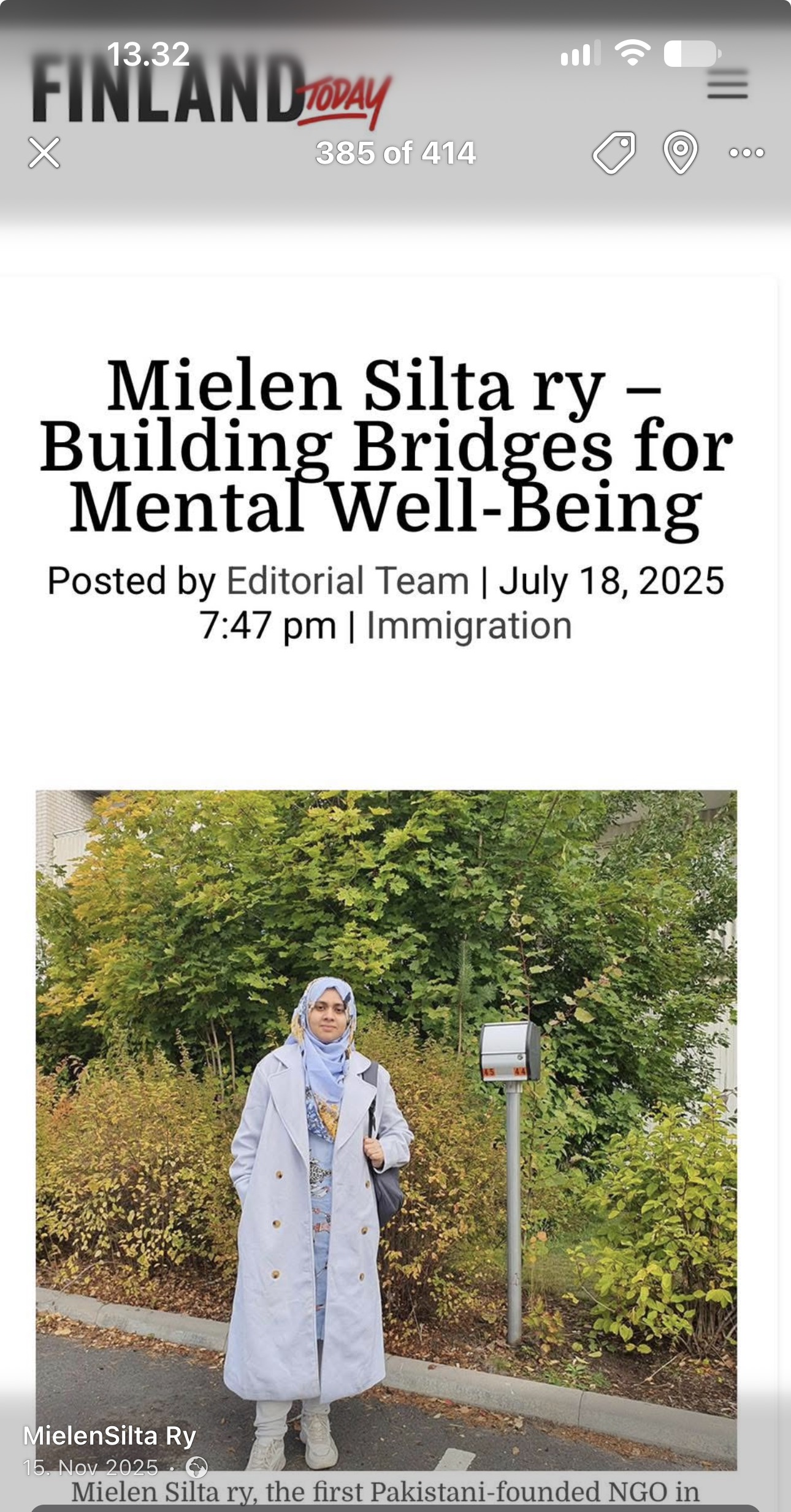
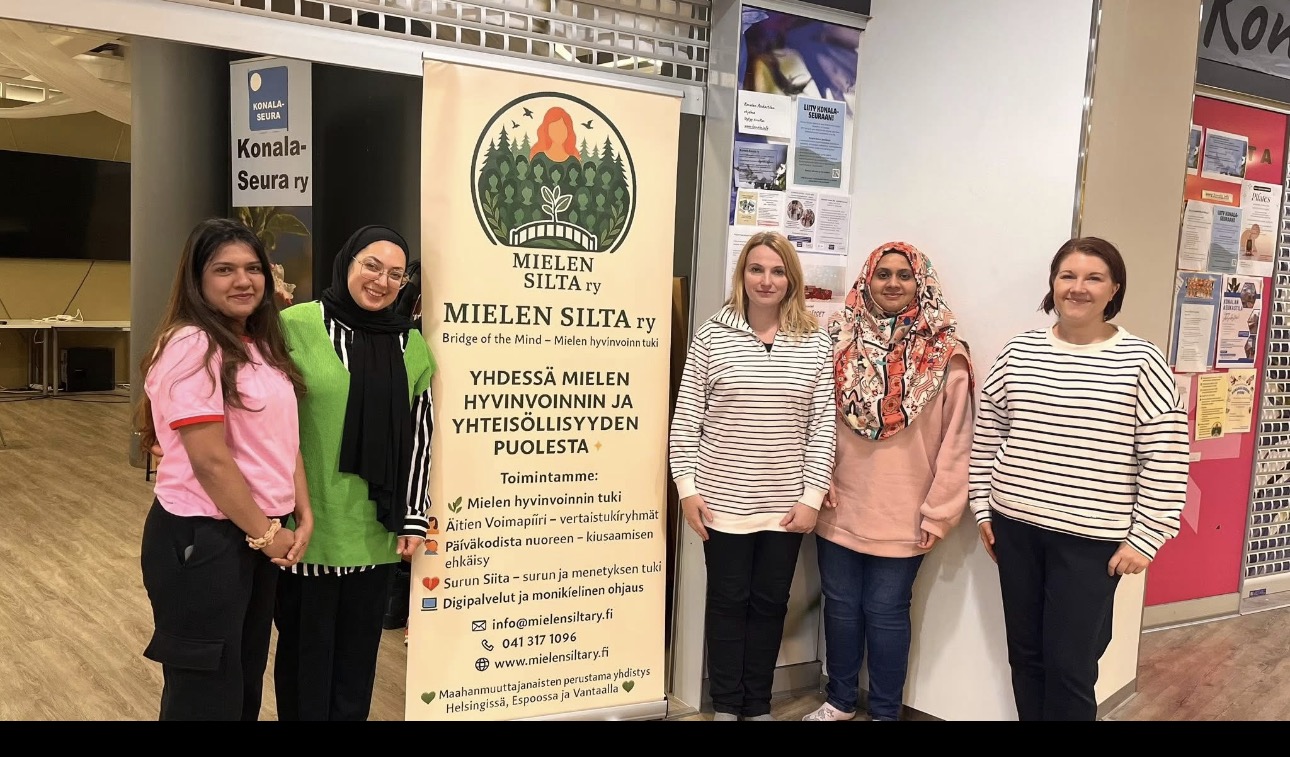
In 2025, I established Mielen Silta ry, a registered association based in Helsinki.
Our work focuses on community participation, inclusion, peer support and practical learning opportunities.
Through the association, we have organised cultural and community activities and welcomed volunteers, students and interns.
I have seen how opportunities to participate can help people develop confidence, language skills and practical experience.
This work has strengthened my belief that integration is most effective when people can actively contribute rather than remain passive recipients of services.
It has also highlighted a contradiction in my own professional journey.
I have been able to create opportunities for others while continuing to face uncertainty about my own employment prospects.
Running an association is meaningful work, but it does not remove my desire to pursue a professional career corresponding to my education.
Nor should community volunteering become a substitute for fair access to paid employment.
People who are motivated to contribute should have pathways through which their abilities can lead to sustainable professional opportunities.
The cost of overlooking existing talent
Finland’s employment challenges affect people from many backgrounds. Finnish-born graduates and experienced professionals also face unemployment.
The difficulties of internationally educated workers should therefore not be presented as though they exist separately from the wider labour market.
However, a challenging economy does not make questions of equal opportunity irrelevant.
Finland has people already living within its borders who have international education, professional experience, language skills and the motivation to work.
When those abilities remain unused, there are consequences beyond the individual jobseeker.
People may lose professional confidence. Their skills may become outdated. Families may reconsider their future. Some may eventually move to countries where they believe their career prospects are stronger.
These decisions can also represent a loss of potential contribution to Finnish society.
It is worth asking whether existing systems make sufficient use of the skills already available in the population.
Fair recruitment, clearer professional recognition pathways, practical language development and access to workplace experience are not simply questions of immigrant integration.
They are also questions of how effectively a society uses its human resources.
Citizenship must mean more than legal recognition
I became a Finnish citizen in July 2026.
My children are growing up here. I have studied here, established an organisation here and built much of my life around Finnish society.
Yet some responses to my interview suggested that speaking critically about employment opportunities made my presence in Finland questionable.
This reflects an expectation that deserves scrutiny: the idea that immigrants should demonstrate gratitude by avoiding criticism.
I appreciate the opportunities I have had in Finland.
But gratitude and critical engagement are not mutually exclusive.
Citizenship carries the right to participate in public discussion, question institutions and express concerns about society.
That right should not depend on where someone was born or whether they speak Finnish with an accent.
A naturalised citizen should not have to demonstrate permanent satisfaction with every aspect of the country to be considered a legitimate participant in its public life.
Belonging cannot be conditional on silence.
Nor should an immigrant’s willingness to discuss discrimination be treated as evidence that they have failed to integrate.
The ability to raise concerns, participate in debate and challenge unfairness is itself part of democratic participation.
Finland needs a more honest conversation about integration
I am not arguing that every unemployed immigrant has experienced discrimination.
I am not suggesting that professional language requirements should be abandoned or that international qualifications should automatically provide access to regulated professions.
And I do not believe employers can be expected to create jobs simply because applicants are qualified.
My argument is more fundamental.
If Finland expects immigrants to learn its language, acquire relevant qualifications and participate in working life, it must also examine the barriers that can prevent qualified individuals from entering that working life.
It must distinguish between a genuine lack of professional competence and assumptions based on language background, religion or origin.
It must recognise that professional integration is not completed when someone passes a language examination or receives recognition for a degree.
Those achievements need to lead towards meaningful opportunities.
And it must accept that immigrants, like other professionals, may eventually decide to pursue their careers elsewhere.
That decision should prompt reflection rather than resentment.
A question worth asking
The debate about immigration often begins by asking what immigrants should do for Finland.
Perhaps it is time to ask a second question.
What happens when immigrants have made serious efforts to meet society’s expectations, but their qualifications and ambitions still cannot find a place in its working life?
My experience is one example, not a complete description of the Finnish labour market.
But it raises questions that deserve answers beyond comments about accents, religious clothing or where someone was born.
I came to Finland to build a future, not to abandon my professional ambitions.
I learned Finnish because I wanted to participate.
I continued studying because I wanted to meet local requirements.
I founded an association because I wanted to contribute.
And I continue seeking professional opportunities because I want to work.
If those opportunities eventually lead me outside Finland, that will not mean I was unwilling to integrate.
It will mean I remained committed to building a professional future, even when the path I had hoped for did not materialise.
Finland has every right to expect immigrants to contribute. But a serious conversation about integration must also ask whether those who are ready to contribute have a fair chance to do so.
That is not an attack on Finland.
It is a question that any society committed to equality should be willing to examine.
Related media coverage
In November 2026, Helsingin Sanomat featured my experience of seeking professional employment in Finland despite having an internationally obtained master’s degree, additional Finnish education and Finnish-language skills.
Read the Helsingin Sanomat interview: Helsingin Sanomat ↗