Helsinki, Finland · Social impact & leadership

Kashaf
Ali.

Social work professional, founder of Mielen Silta ry, and advocate for inclusive communities, stronger families and meaningful participation in Finnish society.

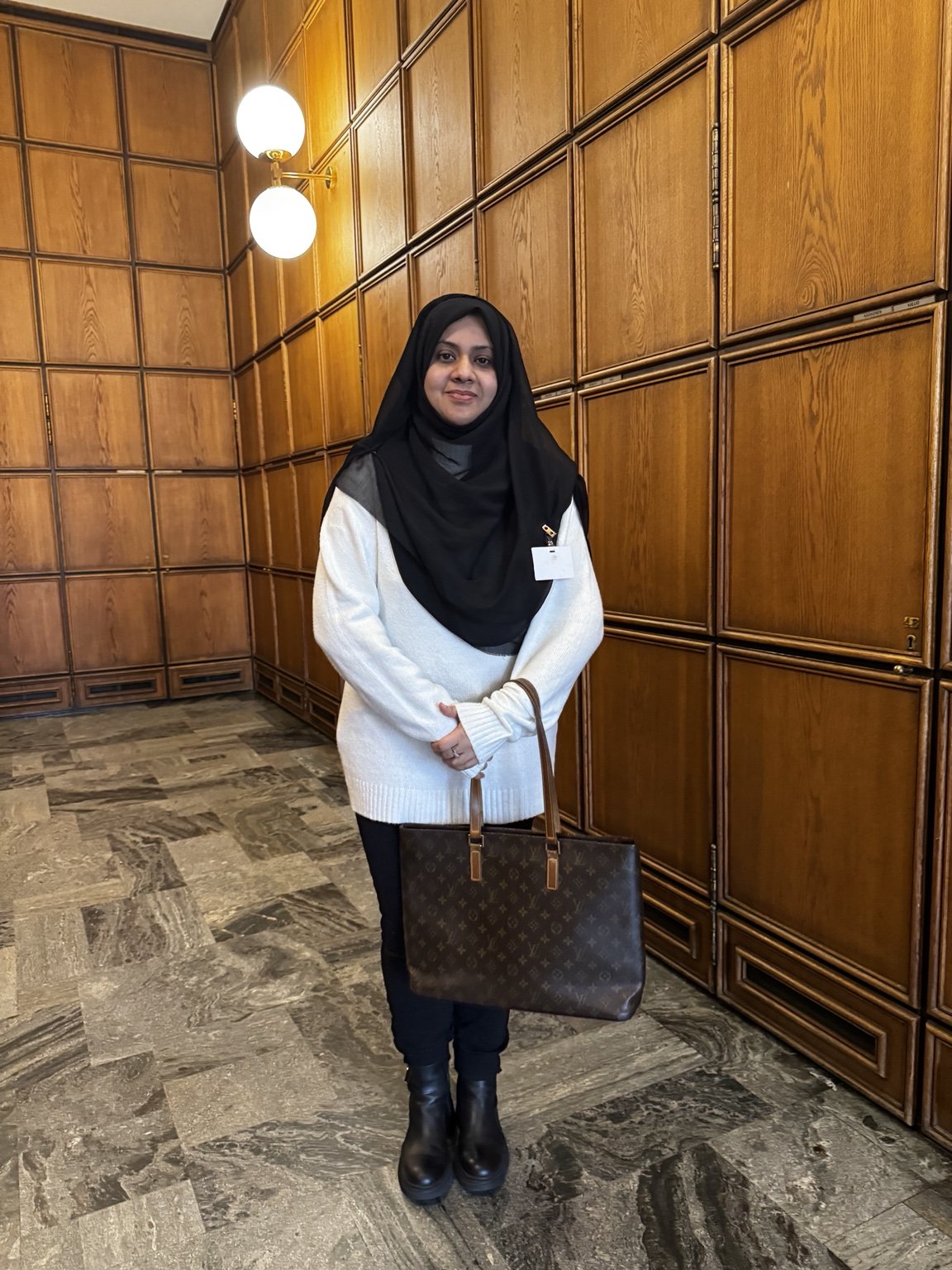
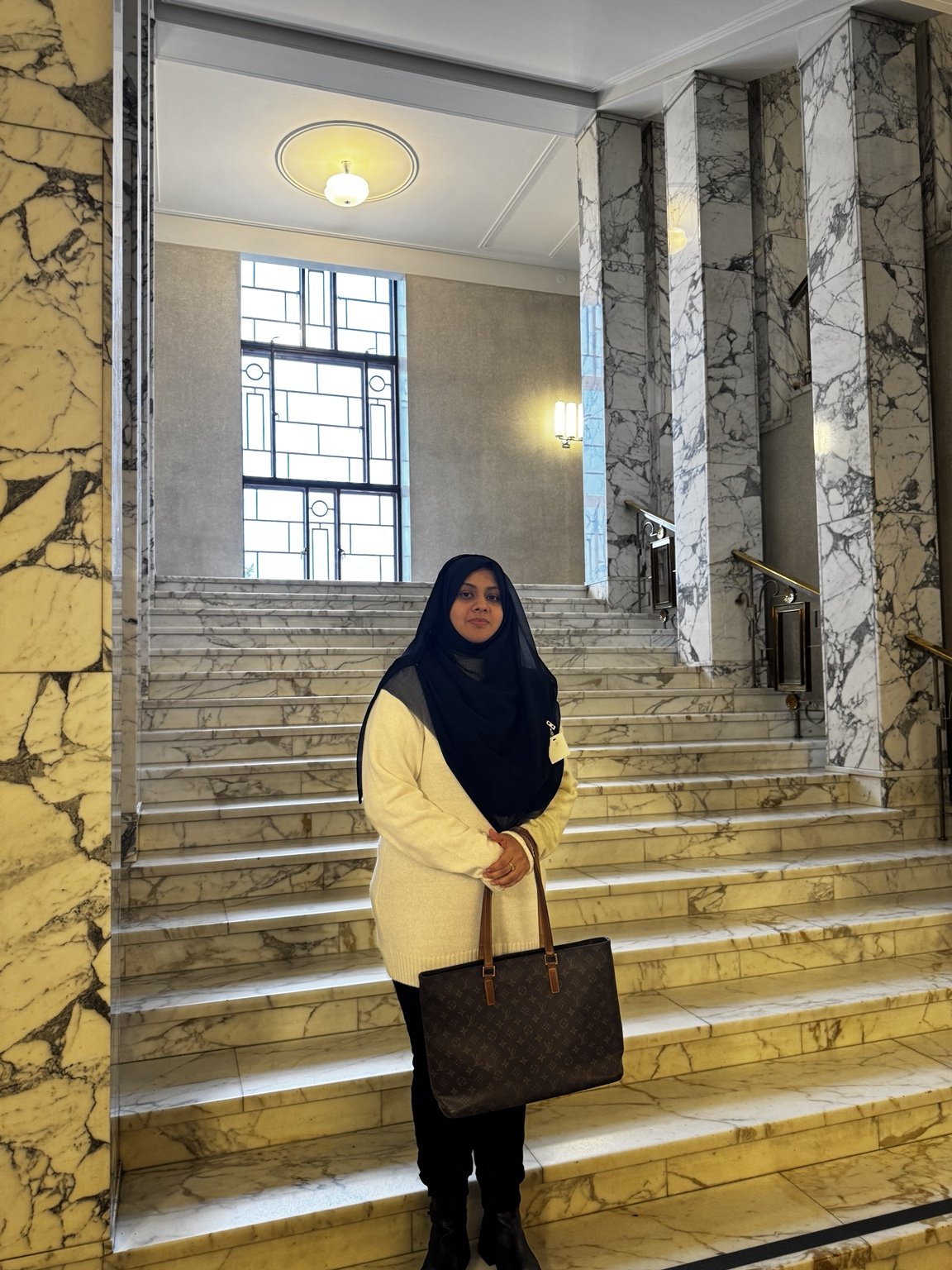
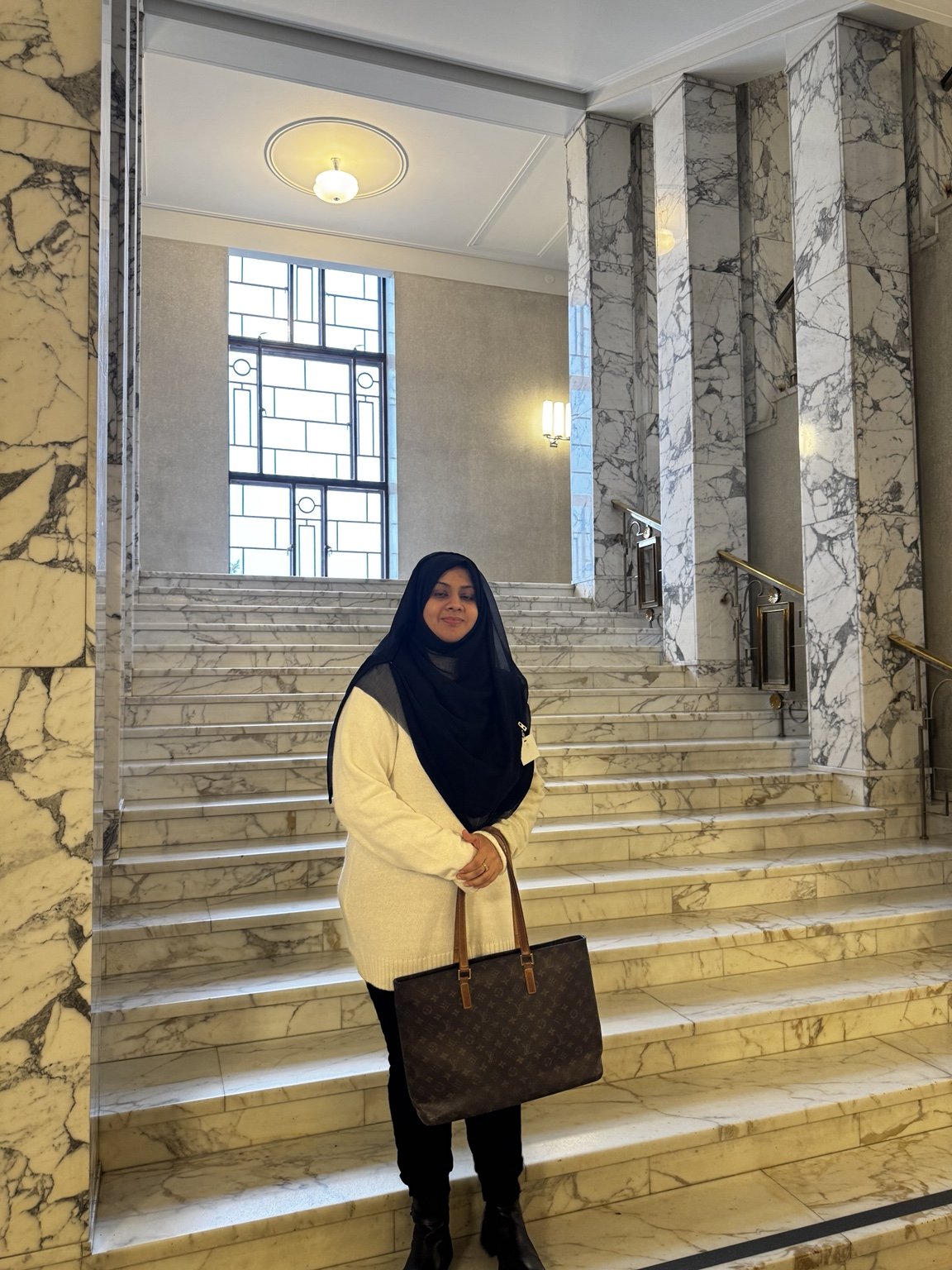
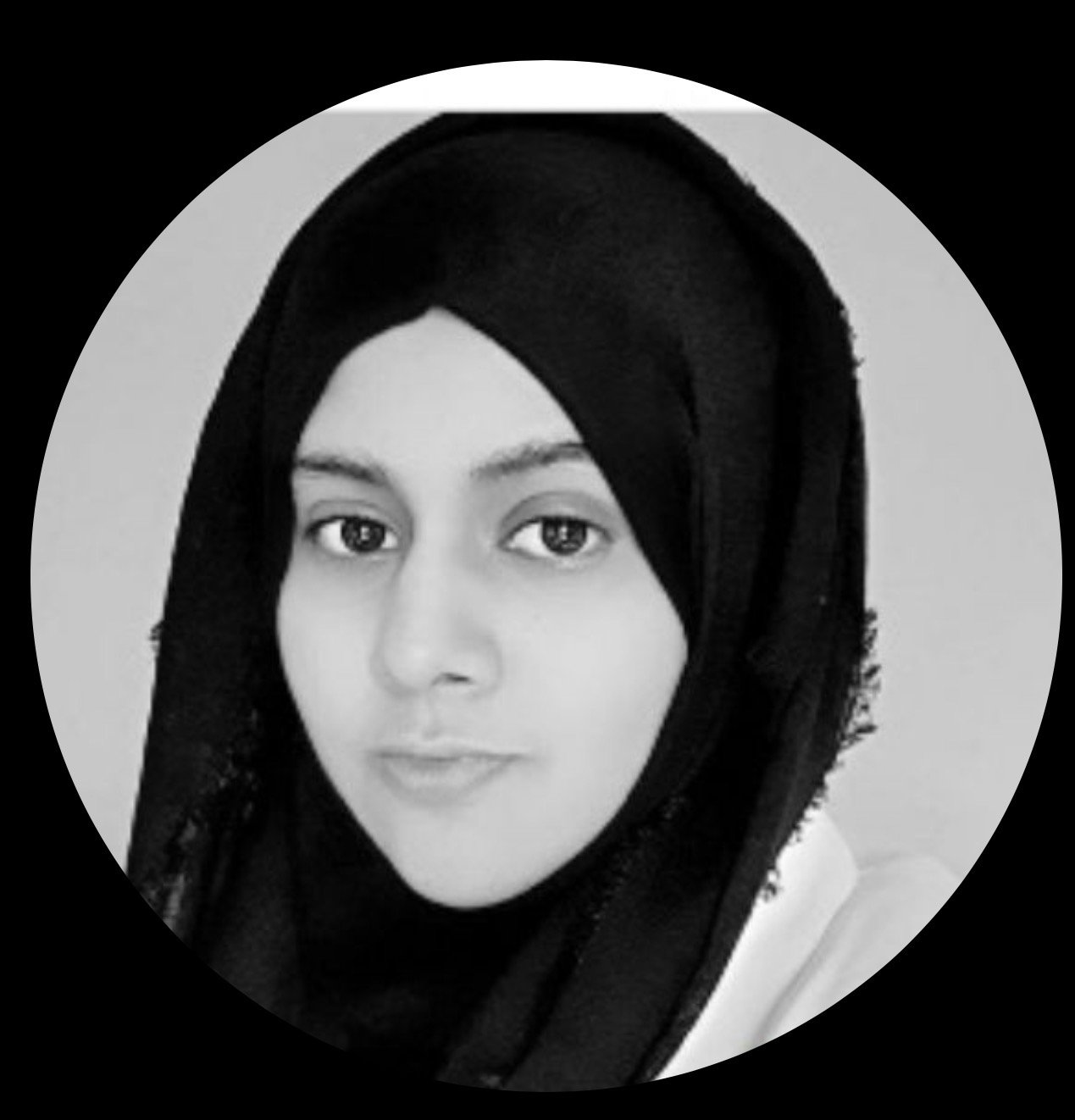
Kashaf Ali photographed during her visit to the Finnish Parliament01 / A mission to connect
FOUNDER Mielen Silta ryFOCUS Social inclusion & well-beingBASED IN Helsinki, Finland
01 / About

Rooted in people.
Driven by purpose.

A professional path across countries and communities, united by a commitment to dignity, opportunity and belonging.

“A stronger society is one where every voice has the chance to be heard.”

I am Kashaf Ali, a Helsinki-based social work professional and community leader. Originally from Pakistan, I moved to Finland in April 2020 and became a Finnish citizen in 2026.

My work brings together experience in social welfare, communication, community development and culturally sensitive mental health support. My academic qualifications include a BS (Hons) in Mass Communication and an MSc in Social Work from the University of the Punjab, with a degree-equivalence decision from the Finnish National Agency for Education (OPH / Opetushallitus) confirming comparability to a Finnish master's degree. In Finland, I completed the Mielenterveys- ja päihdetyön ammattitutkinto at Omnia.

Through Mielen Silta ry, I work to make communities more inclusive and to connect everyday lived experiences with the people and institutions that shape public services.

My community work was also featured in Helsingin Sanomat. You can read the story here: Helsingin Sanomat — Read the article ↗

Social WorkMaster's-level education
FinlandBased in Helsinki since April 2020
Community DevelopmentGrassroots programmes and partnerships
Public EngagementAdvocacy and civic participation
Education & certifications

Academic qualifications & continuing education

My academic and vocational qualifications combine social work, mass communication and specialised training in mental health and substance abuse work.

BS (Hons) · Mass Communication

Bachelor of Science (Honours) in Mass Communication.

MSc · Social Work

University of the Punjab · Master of Science in Social Work. A Finnish National Agency for Education (OPH / Opetushallitus) decision confirms comparability to a Finnish master's degree.

OPH · Degree Equivalence Decision

Finnish National Agency for Education (Opetushallitus)
Official decision recognising my foreign MSc qualification as comparable to a Finnish master’s degree. This is academic degree comparability, not a Finnish social worker practice licence. The full decision is not published for privacy.

Mielenterveys- ja päihdetyön ammattitutkinto

Omnia, Finland · Finnish vocational qualification in mental health and substance abuse work.

Continuing education and certificates

HarvardX Professional Certificate

Improving Educational Outcomes through Family Engagement
HarvardX / edX · Professional Certificate · December 2025

HarvardX Verified Certificate

Family Engagement in Education: Dual Capacity-Building Framework
HarvardX / edX · Verified course certificate · 17 December 2025

Psychological First Aid certificate

Psychological First Aid
Johns Hopkins University / Coursera · 13 January 2026

02 / Leadership

Leadership that
builds bridges.

Turning ideas into accessible community initiatives through collaboration, practical action and shared responsibility.

01 — FOUNDER & CHAIRPERSON

Mielen Silta ry

Founded in 2025, Mielen Silta ry is a Helsinki-based nonprofit association working across mental well-being, family support, inclusion and intercultural participation. I serve as its chairperson and project manager.

02 — COMMUNITY LEADERSHIP

Bringing communities together

Designing welcoming spaces for families, women, children and people from diverse backgrounds to connect, learn and take part in community life.

03 — COLLABORATION

Partnerships with purpose

Connecting local associations, public services, networks and community members around shared challenges and opportunities.

04 — ADVOCACY

From lived experience to dialogue

Helping community perspectives enter discussions on social services, integration, children's well-being and equitable participation.

05 — ANTI-RACISM ADVOCACY

Challenging racism, creating belonging

I advocate against discrimination and racist exclusion, and for fair treatment in education, employment, public services and everyday life. My anti-racism initiative is part of my wider commitment to amplifying affected voices and encouraging constructive public dialogue.

Explore anti-racism & human rights →
06 — PARLIAMENTARY ENGAGEMENT · 4 NOV 2026

Discussion at the Finnish Parliament

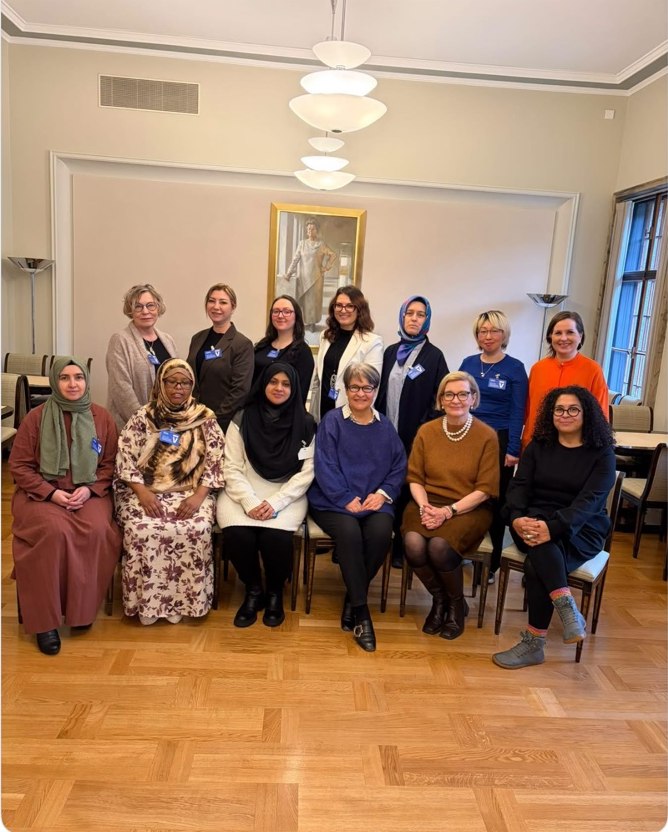
I participated in a discussion at the Eduskunta hosted by Deputy Speakers Paula Risikko and Tarja Filatov. I brought forward perspectives on employment, integration and work-and-learn pathways. This was civic engagement, not parliamentary office or formal endorsement.

07 — WORK & LEARN MODEL

Learning and employment together

I advocate a Work & Learn approach that connects on-the-job learning, language development and meaningful routes into employment. The model is a proposal I promote, not an officially adopted national programme.

08 — HIGHLY QUALIFIED IMMIGRANTS

Recognising international expertise

I advocate fairer opportunities for internationally educated professionals, including transparent recognition of qualifications, access to relevant experience and employment pathways that make use of existing skills.

09 — LANGUAGE ACCESS

Free Finnish learning opportunities

Through Mielen Silta ry, I have arranged free Finnish-language learning opportunities for people taking part in work trials and students working with the association, supporting language confidence alongside practical experience.

10 — ARTICLE · ANTI-RACISM & EQUALITY

Racism and Equality in Finland: Moving Beyond Inclusion Towards Genuine Belonging

Why equality must be reflected not only in laws and policies, but also in everyday experiences, workplaces and communities. Read the full article on employment barriers, everyday inclusion and what needs to change.

Read the full article →
Organisation profile

Mielen Silta ry

The Helsinki-based association founded in 2025, where I serve as Founder and Chairperson.

01 / About

About the organisation

Supporting mental well-being, social participation, and community connection among children, families and multicultural communities.

Official Mielen Silta ry website ↗
02 / Activities

Projects and programmes

Bullying prevention, women's peer support, grief support, digital inclusion and cultural exchange.

Explore our projects ↓
03 / Advocacy

Employment and inclusion

Work & Learn, fair opportunities for highly qualified immigrants, and practical access to Finnish-language learning.

Read my public policy work ↓
03 / Projects

Community work
in action.

Selected programmes and initiatives developed through Mielen Silta ry.

01

Päiväkodista nuoreen

Emotional and social skills, family engagement and proactive approaches to preventing bullying.

Children & education
02

Naisten Voimapiiri

Community-based opportunities for women to connect, support one another and strengthen everyday confidence.

Women's empowerment
03

Surun Silta

Supporting dialogue, empathy and community connection around grief, loss and resilience.

Grief & well-being
04

Threads of Culture

Creative workshops and cultural exchange activities that bring together people from different backgrounds.

Culture & belonging
05

Digi Silta

Supporting digital participation and everyday confidence in navigating services and information.

Digital inclusion
06

Arjen Silta

Strengthening everyday support networks, practical participation and community connection.

Everyday inclusion
07

Anti-racism initiative

Advocacy for dignity, fair opportunity, representation and action against racism and discrimination in Finland.

Equality & human rights
08

Work & Learn

A proposed approach combining supported workplace practice, learning and language development.

Employment & learning
09

Highly Qualified Immigrants

Advocacy for fair recognition and meaningful employment pathways for professionals educated abroad.

Qualifications & opportunity
10

Free Finnish-language learning

Free learning opportunities arranged for work-trial participants and students working with Mielen Silta ry.

Language & participation
04 / Values & beliefs

What I stand for.

Principles that guide my social work, community leadership and civic advocacy.

01

Equality without exceptions

Racism and discrimination have no place in a society that values dignity. Everyone deserves equal treatment, regardless of origin, faith, language or identity.

02

Belonging, not just integration

Participation must mean having a voice in decisions, access to opportunity, and the freedom to contribute while remaining yourself.

03

Women's voice and independence

Women deserve safety, education, economic opportunity, representation and the power to shape their own futures.

04

Children deserve protection

Preventing bullying and supporting emotional wellbeing should begin early, with families, schools and communities working together.

05

Fair pathways to work

Qualifications, skills and potential should be recognised fairly. Language learning and employment opportunities should support rather than exclude newcomers.

06

Dialogue and accountable leadership

Public institutions and community organisations should listen to lived experience, work across differences and be clear about what they deliver.

07

Learning should be accessible

Practical experience, free language-learning opportunities and the skills people bring from abroad all deserve recognition and support.

Anti-Racism & Human Rights

Dignity is not conditional.

Explore my advocacy for fair treatment, representation and equal opportunities in Finland, together with the work and learning pathways I believe can strengthen inclusion.

Read my advocacy statement ↗
05 / Media & recognition

Stories, coverage
& public records.

A selection of public sources documenting the association's work and community engagement.

Group photograph of participants at a November 2026 meeting at the Finnish Parliament
4 November 2026 · Finnish Parliament

Dialogue at the heart of Finnish democracy.

I joined a discussion at the Finnish Parliament with representatives of organisations working with multicultural women, hosted by Deputy Speakers Paula Risikko and Tarja Filatov. It was an opportunity to raise the importance of meaningful pathways to employment, recognition of qualifications and participation.

This was a civic visit and discussion, not an elected or appointed parliamentary role.

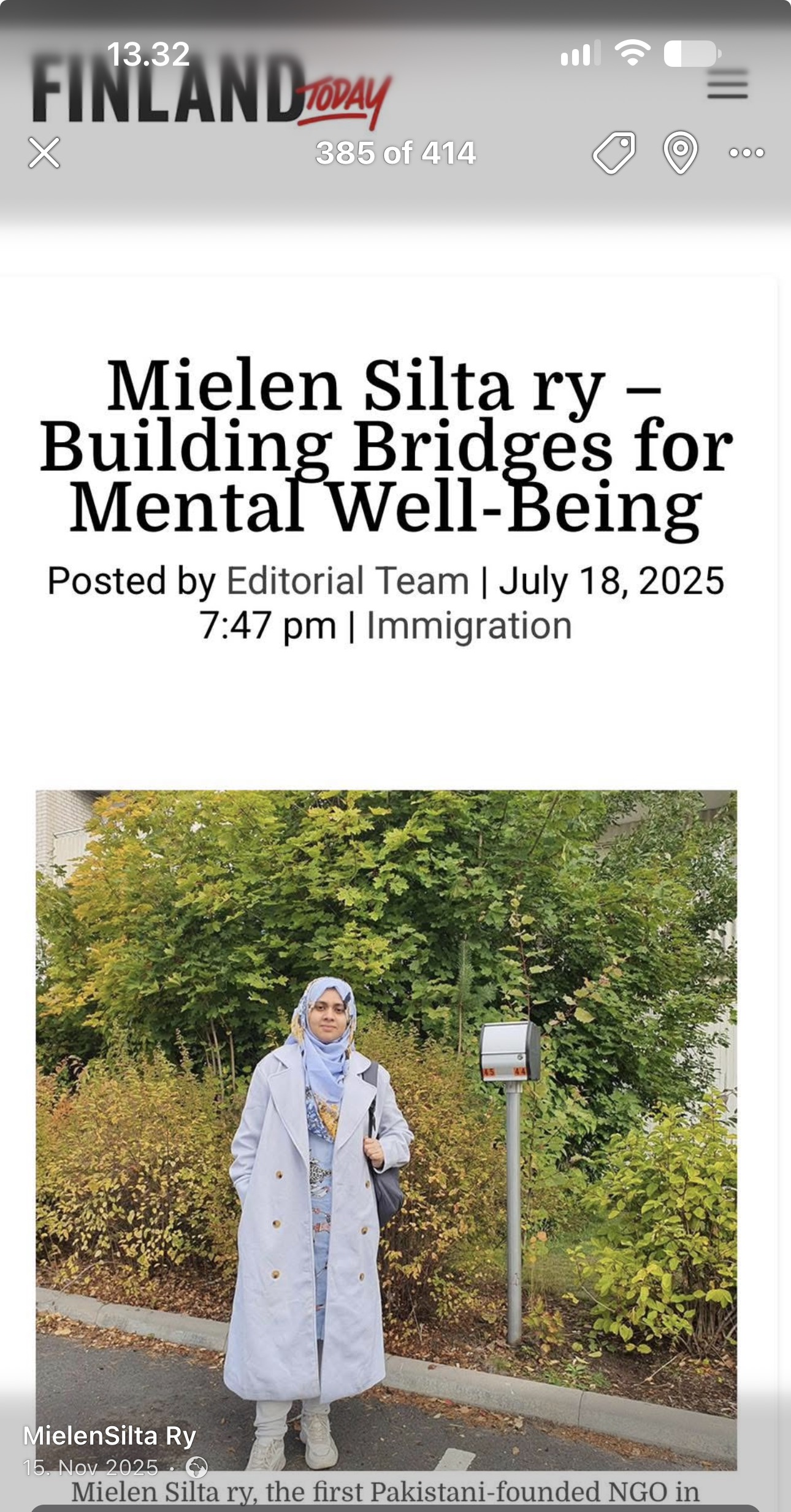
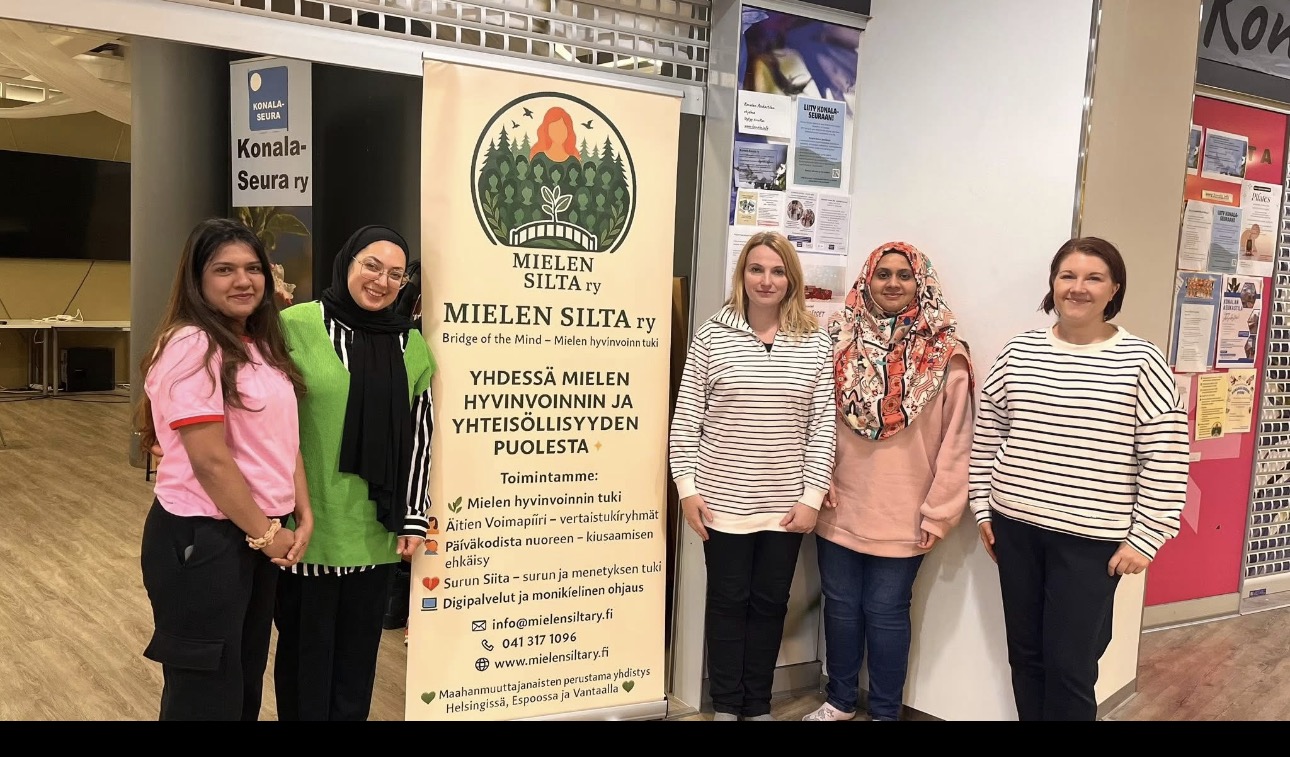
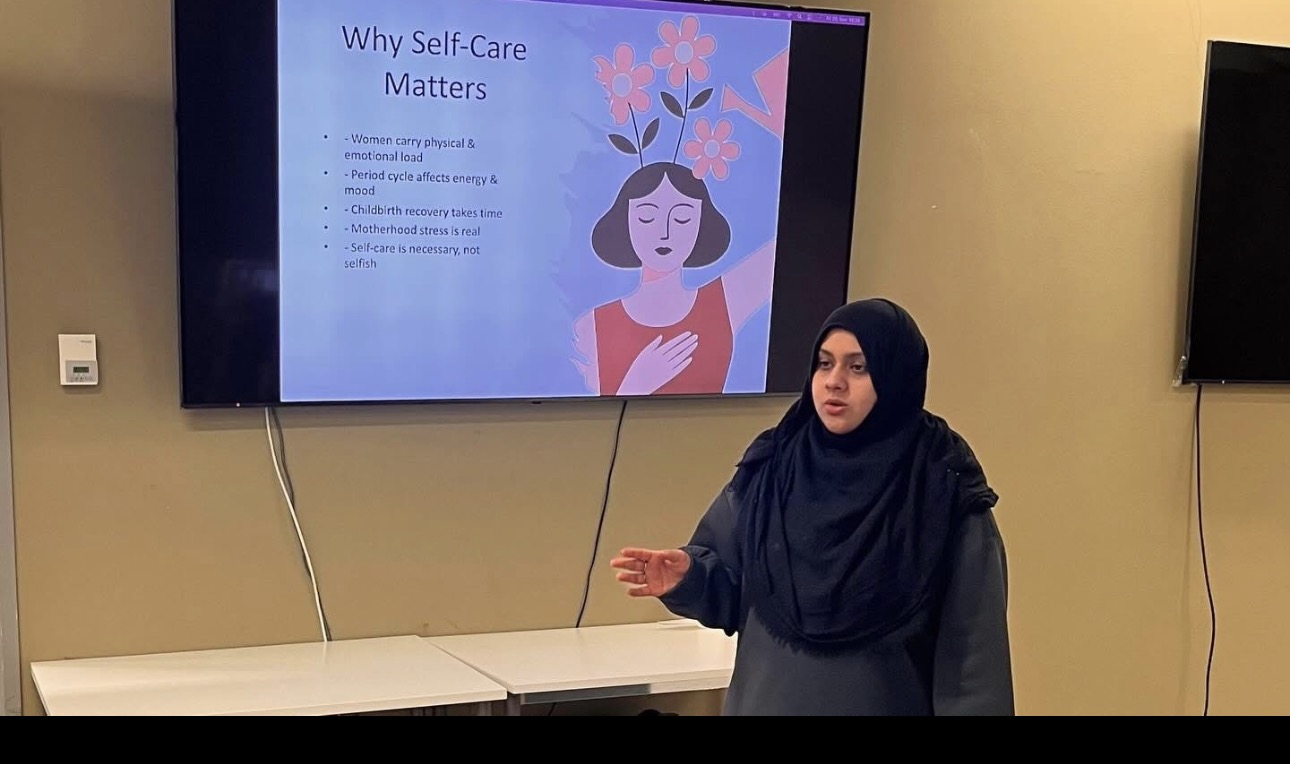
Community work & independent coverage

Work in action.

Selected moments from community leadership, practical wellbeing education and independent reporting on Mielen Silta ry.

External links document public activities; their inclusion does not imply endorsement by the publishing organisations.

Writing · Opinion

Words on belonging,
work & choice.

Opinion pieces by Kashaf Ali on integration, equality, women’s rights and fair opportunity.

21 November 2026

When Integration Is Never Enough: The Double Standards Facing Qualified Immigrants in Finland

Finland expects immigrants to learn the language, gain qualifications and work. What happens when they do all that and still cannot find a place in the labour market?

Read full article +

Finland has spent years debating whether immigrants are willing to integrate. The expectations are familiar: learn Finnish, obtain qualifications, find employment, become financially independent and contribute to society.

These are reasonable expectations. But they raise a question that receives far less attention: What responsibility does society have when immigrants make serious efforts to meet these expectations but still struggle to access professional opportunities?

The public conversation often focuses on what immigrants have failed to do. It is considerably less comfortable discussing what happens when they have invested years in education, language learning and professional development yet remain outside the labour market.

My recent interview with Helsingin Sanomat brought this contradiction into sharp focus.

I am a Finnish citizen of Pakistani origin. I hold a master’s degree in social work, have completed vocational education in Finland, passed the speaking component of the YKI examination at B2 level and gained practical experience in Finnish organisations.

I have also founded a registered association that creates opportunities for community participation, learning and inclusion.

Yet finding employment that reflects my education and experience has remained difficult.

I shared my experience publicly because I believe the employment of internationally educated professionals deserves a more serious discussion than it often receives.

The reactions revealed something equally important about the way integration is understood in Finland.

Integration is expected, but opportunity is not guaranteed

I arrived in Finland in 2020 with professional experience and a master’s degree in social work from the University of the Punjab.

Before moving to Finland, I had worked in social welfare services at Mayo Hospital in Lahore, Pakistan.

Like many internationally educated professionals, I discovered that rebuilding a career in another country requires much more than possessing a qualification.

I sought recognition of my degree, studied Finnish and completed additional vocational education.

I completed the Mielenterveys- ja päihdetyön ammattitutkinto (Further Vocational Qualification in Mental Health and Substance Abuse Work) at Omnia, developing my professional knowledge and practical skills in mental health and substance abuse work.

The Finnish National Agency for Education recognised the academic equivalence of my master’s degree. I also understood that academic recognition was not the same as professional authorisation to practise social work.

I continued developing my language skills and professional knowledge. I passed the speaking component of the YKI examination at B2 level.

In October 2026, I also passed all four parts of the entrance assessment for practical nurse education.

These were practical steps towards participation in Finnish working life.

I do not suggest that qualifications automatically entitle anyone to employment. Employers have legitimate requirements, and competition for jobs is real.

But when an internationally educated professional invests years in meeting local expectations, the discussion should not end with the observation that they remain unemployed.

We should also examine whether recruitment practices, professional recognition pathways and access to workplace experience allow people to use the skills they already possess.

Integration cannot be measured only by the efforts immigrants make. It must also be examined through the opportunities available to them.

The uncomfortable contradiction in the immigration debate

One of the recurring claims in immigration discussions is that immigrants are unwilling to work or become financially independent.

Yet when a qualified immigrant openly expresses the desire to work and considers moving abroad if suitable opportunities remain unavailable, that decision can also provoke hostility.

This is the contradiction I find difficult to reconcile.

If employment and financial independence are the goals, why should the pursuit of those goals elsewhere be treated as evidence of disloyalty?

Finnish professionals routinely consider international opportunities when their career prospects are limited. Their decisions are generally understood in terms of professional ambition, personal circumstances and economic opportunity.

An immigrant who has become a Finnish citizen should be entitled to make the same calculation.

My willingness to consider employment outside Finland is not a rejection of integration. It reflects my desire to use the education and experience I have acquired.

I am not interested in remaining professionally inactive when I have qualifications and the motivation to work.

Nor do I believe that immigrants should be expected to remain indefinitely in a labour market where they cannot establish a sustainable career.

Of course, different people express different opinions about immigration. Those who criticise unemployment are not necessarily the same individuals who criticise emigration.

Nevertheless, these arguments expose a wider problem: immigrants can find themselves judged negatively whether they remain unemployed, question employment barriers or decide to pursue opportunities elsewhere.

That is not a coherent approach to integration.

A short interview is not a professional assessment

Following my Helsingin Sanomat interview, some social media commenters questioned my Finnish-language skills.

I was nervous during the recording and did not express myself as naturally as I usually do. Speaking in front of a camera is different from participating in an ordinary conversation or working in a familiar environment.

I do not claim to speak flawless Finnish. I continue to develop my language skills, including the specialised vocabulary required in professional settings.

However, I have passed the speaking component of the YKI examination at B2 level. I have also completed the Mielenterveys- ja päihdetyön ammattitutkinto at Omnia and communicated in Finnish in educational and community environments.

A short interview cannot replace a proper assessment of those abilities.

There is a legitimate discussion to be had about language requirements in social work. Professionals must be able to understand clients, communicate accurately and meet the responsibilities of their positions.

Maintaining these standards is important.

But professional language proficiency should be assessed through relevant evidence, not assumptions based on an accent or a few nervous moments in front of a camera.

The distinction matters.

An accent is a feature of speech, not a reliable measure of professional knowledge. Grammatical mistakes do not automatically indicate an inability to perform a job. Equally, passing a language examination does not mean someone has mastered every form of professional communication.

Both realities can be acknowledged without dismissing a person’s competence.

If Finland expects immigrants to develop strong professional Finnish, workplaces must also be considered part of that development.

Language is not learned exclusively in classrooms. Professional fluency is strengthened through experience, interaction and responsibility.

A system that expects extensive workplace language competence while offering limited opportunities to acquire workplace experience risks creating a difficult cycle for internationally educated jobseekers.

When criticism shifts from competence to identity

The reaction to my interview was not limited to employment or language requirements.

Some comments questioned my religion, my Pakistani background and my decision to wear a hijab. Others suggested that I should return to my country of origin.

These comments raise a different issue.

Disagreement about someone’s professional qualifications is legitimate. Questioning whether a person belongs in society because of their religion or background is not the same thing.

I am a Muslim woman who wears a hijab. I am also a Finnish citizen, a mother, a social work professional and the founder of a community organisation.

None of these identities cancels out the others.

My religious clothing does not determine my professional competence. My birthplace does not determine my commitment to Finnish society.

I should be assessed according to the requirements of the work I seek, just as any other applicant should be.

Racism is not limited to explicit hostility. It can also appear when assumptions about someone’s background influence how their abilities are interpreted.

A foreign accent may be treated as evidence of incompetence before a person’s qualifications are considered. A religious symbol may become the centre of attention in a discussion that should be about employment.

This does not mean every criticism directed at an immigrant is racist. It means criticism should be examined on its merits, and prejudice should not be disguised as an objective assessment of competence.

A fair society should be able to discuss professional standards without turning someone’s identity into a professional disadvantage.

The value of qualifications should not depend on where they were obtained

The recognition of international qualifications is another important part of this discussion.

My master’s degree was completed in Pakistan, and its academic equivalence has been recognised in Finland.

I understand that professional authorisation involves additional requirements. Different countries have different systems, legislation and expectations.

But recognising these differences should not lead to the assumption that education obtained outside Finland has no value.

International qualifications represent years of study and professional development. Many immigrants also bring experience from institutions, organisations and workplaces in their countries of origin.

This knowledge may need to be supplemented or adapted to the Finnish context.

That is different from dismissing it.

A more productive discussion would examine how internationally educated professionals can demonstrate their existing competencies, complete necessary supplementary requirements and access suitable professional pathways.

The question should not simply be whether a qualification was obtained in Finland.

It should be what the qualification represents, which competencies are relevant and what additional requirements must be met.

Creating opportunities when existing pathways are difficult

In 2025, I established Mielen Silta ry, a registered association based in Helsinki.

Our work focuses on community participation, inclusion, peer support and practical learning opportunities.

Through the association, we have organised cultural and community activities and welcomed volunteers, students and interns.

I have seen how opportunities to participate can help people develop confidence, language skills and practical experience.

This work has strengthened my belief that integration is most effective when people can actively contribute rather than remain passive recipients of services.

It has also highlighted a contradiction in my own professional journey.

I have been able to create opportunities for others while continuing to face uncertainty about my own employment prospects.

Running an association is meaningful work, but it does not remove my desire to pursue a professional career corresponding to my education.

Nor should community volunteering become a substitute for fair access to paid employment.

People who are motivated to contribute should have pathways through which their abilities can lead to sustainable professional opportunities.

The cost of overlooking existing talent

Finland’s employment challenges affect people from many backgrounds. Finnish-born graduates and experienced professionals also face unemployment.

The difficulties of internationally educated workers should therefore not be presented as though they exist separately from the wider labour market.

However, a challenging economy does not make questions of equal opportunity irrelevant.

Finland has people already living within its borders who have international education, professional experience, language skills and the motivation to work.

When those abilities remain unused, there are consequences beyond the individual jobseeker.

People may lose professional confidence. Their skills may become outdated. Families may reconsider their future. Some may eventually move to countries where they believe their career prospects are stronger.

These decisions can also represent a loss of potential contribution to Finnish society.

It is worth asking whether existing systems make sufficient use of the skills already available in the population.

Fair recruitment, clearer professional recognition pathways, practical language development and access to workplace experience are not simply questions of immigrant integration.

They are also questions of how effectively a society uses its human resources.

Citizenship must mean more than legal recognition

I became a Finnish citizen in July 2026.

My children are growing up here. I have studied here, established an organisation here and built much of my life around Finnish society.

Yet some responses to my interview suggested that speaking critically about employment opportunities made my presence in Finland questionable.

This reflects an expectation that deserves scrutiny: the idea that immigrants should demonstrate gratitude by avoiding criticism.

I appreciate the opportunities I have had in Finland.

But gratitude and critical engagement are not mutually exclusive.

Citizenship carries the right to participate in public discussion, question institutions and express concerns about society.

That right should not depend on where someone was born or whether they speak Finnish with an accent.

A naturalised citizen should not have to demonstrate permanent satisfaction with every aspect of the country to be considered a legitimate participant in its public life.

Belonging cannot be conditional on silence.

Nor should an immigrant’s willingness to discuss discrimination be treated as evidence that they have failed to integrate.

The ability to raise concerns, participate in debate and challenge unfairness is itself part of democratic participation.

Finland needs a more honest conversation about integration

I am not arguing that every unemployed immigrant has experienced discrimination.

I am not suggesting that professional language requirements should be abandoned or that international qualifications should automatically provide access to regulated professions.

And I do not believe employers can be expected to create jobs simply because applicants are qualified.

My argument is more fundamental.

If Finland expects immigrants to learn its language, acquire relevant qualifications and participate in working life, it must also examine the barriers that can prevent qualified individuals from entering that working life.

It must distinguish between a genuine lack of professional competence and assumptions based on language background, religion or origin.

It must recognise that professional integration is not completed when someone passes a language examination or receives recognition for a degree.

Those achievements need to lead towards meaningful opportunities.

And it must accept that immigrants, like other professionals, may eventually decide to pursue their careers elsewhere.

That decision should prompt reflection rather than resentment.

A question worth asking

The debate about immigration often begins by asking what immigrants should do for Finland.

Perhaps it is time to ask a second question.

What happens when immigrants have made serious efforts to meet society’s expectations, but their qualifications and ambitions still cannot find a place in its working life?

My experience is one example, not a complete description of the Finnish labour market.

But it raises questions that deserve answers beyond comments about accents, religious clothing or where someone was born.

I came to Finland to build a future, not to abandon my professional ambitions.

I learned Finnish because I wanted to participate.

I continued studying because I wanted to meet local requirements.

I founded an association because I wanted to contribute.

And I continue seeking professional opportunities because I want to work.

If those opportunities eventually lead me outside Finland, that will not mean I was unwilling to integrate.

It will mean I remained committed to building a professional future, even when the path I had hoped for did not materialise.

Finland has every right to expect immigrants to contribute. But a serious conversation about integration must also ask whether those who are ready to contribute have a fair chance to do so.

That is not an attack on Finland.

It is a question that any society committed to equality should be willing to examine.

Related media coverage

In November 2026, Helsingin Sanomat featured my experience of seeking professional employment in Finland despite having an internationally obtained master’s degree, additional Finnish education and Finnish-language skills.

Read the Helsingin Sanomat interview: Helsingin Sanomat ↗

About the author

Kashaf Ali is a Finnish citizen of Pakistani origin, a social work professional and the founder and chairperson of Mielen Silta ry, a Helsinki-based community association established in 2025.

She holds a master’s degree in social work from the University of the Punjab and has completed the Mielenterveys- ja päihdetyön ammattitutkinto (Further Vocational Qualification in Mental Health and Substance Abuse Work) at Omnia in Finland.

Her interests include social inclusion, community development, immigrant employment, recognition of international qualifications and equal opportunities in Finnish society.

Opinion

Her Body, Her Choice — Or Only When We Agree?

Are We Practising Selective Feminism?

Why do we still look at a woman’s clothes before we recognise her mind? A case for respecting every woman’s right to choose, whatever she wears.

Read full article +

We often hear the words women’s empowerment, equality, freedom and feminism. We celebrate women who challenge traditions, break stereotypes and make independent decisions.

But I have a question.

Do we truly support women’s freedom of choice, or do we only support the choices that match our own beliefs?

If a woman chooses to wear a bikini, we may call it freedom.

If another woman chooses to wear a hijab, why do some people immediately assume she is oppressed?

If a woman feels comfortable wearing a shalwar kameez, why should anyone consider her less modern, less independent or less empowered?

And if a woman decides not to wear a hijab, why should anyone question her faith, character or dignity?

Who gave society the authority to decide which woman’s clothing represents freedom and which represents oppression?

It Is Almost 2027. Why Are We Still Judging Women by Their Clothes?

We are living in 2026, just weeks away from 2027.

We talk about artificial intelligence, technological progress, equality, education and human rights. We proudly describe ourselves as a modern and progressive society.

Yet I find myself asking a very basic question:

Why are we still looking at a woman’s clothes before recognising her intelligence?

Why does her appearance become the first topic of discussion instead of her education, professional experience, talents or achievements?

A woman may have spent years studying, building a career, developing skills, serving her community or contributing to society.

But sometimes, before she even gets the opportunity to speak, people have already formed an opinion about her based on what she is wearing.

If she wears a hijab, some may question her independence or assume things about her beliefs.

If she wears revealing clothing, others may question her character or morality.

If she wears traditional clothes, some may assume she is not modern enough.

When did a piece of clothing become more important than a woman’s brain?

We claim to be moving forward, but are we truly progressing if our attitudes towards women remain trapped in old stereotypes?

What is the value of celebrating women’s empowerment if we continue to judge women by their appearance rather than their abilities?

A woman’s clothing tells you very little about her qualifications, intelligence, leadership potential or contribution to society.

And yet, even today, women often have to work harder to be recognised for what they know rather than how they look.

It is almost 2027. How much longer must women prove that their minds matter more than their wardrobes?

Freedom Cannot Have a Dress Code

For me, women’s rights begin with something very simple: the right to make decisions about our own lives.

A woman wearing a hijab is not automatically oppressed. A woman wearing a bikini is not automatically liberated. A woman wearing traditional clothing is not necessarily conservative.

Clothing alone cannot tell us how educated, independent, confident or empowered a woman is.

Her choices may reflect her faith, culture, personality, comfort or simply what she likes.

And she should not have to justify those choices to strangers.

The problem begins when someone else believes they have the right to make that decision for her.

Whether that person is a man or a woman, religious or non-religious, conservative or liberal, controlling another woman’s choices cannot be justified in the name of empowerment.

Are We Practising Selective Feminism?

This is where I believe we need to have a more uncomfortable conversation.

Sometimes, people who strongly defend women’s freedom to dress as they wish become uncomfortable when a woman freely chooses religious clothing.

At the same time, some people who defend a woman’s right to wear the hijab refuse to respect another woman’s decision not to wear it.

Isn’t that a contradiction?

How can we demand freedom for ourselves while questioning another woman’s right to make a different choice?

If we defend a woman’s right to remove her hijab, we should also defend her right to wear one.

If we respect a woman who chooses a bikini, we should respect a woman who chooses a shalwar kameez.

Women’s rights should not change according to the amount of skin a woman chooses to show or cover.

That is what I mean when I question selective feminism.

Empowerment Is Not About Looking a Certain Way

We sometimes create an image of what an empowered woman should look like.

She should dress a certain way, speak a certain way, think a certain way and live according to a particular idea of modernity.

But isn’t that another form of pressure?

We cannot replace one set of expectations with another and call it liberation.

A woman can be religious and independent.

She can be modest and ambitious.

She can be traditional and highly educated.

She can choose not to follow religious traditions and still deserve exactly the same respect.

None of these identities cancels out her intelligence, abilities or rights.

We must also recognise that not every woman’s choice is made under equal circumstances. Family pressure, discrimination, social expectations and restrictive laws can all affect women’s freedom.

That is precisely why we should challenge coercion rather than judge women by what they wear.

Women Should Not Have to Prove Their Freedom

As women, we already face enough expectations.

We are told how to dress, how to behave, how to raise children, how to balance careers and families, and how to present ourselves in public.

Sometimes these expectations come from men. Sometimes they come from other women.

I find the second situation particularly disappointing.

We speak about supporting women, but how often do we genuinely respect a woman whose decisions are different from ours?

Supporting women’s rights does not mean that we must personally agree with every decision another woman makes.

It means recognising that she has the same right to make that decision as we do.

The Question We Should Be Asking

Instead of asking why a woman wears a hijab, why she wears a bikini or why she prefers traditional clothing, perhaps we should ask something more meaningful:

Did she make that choice freely?

Was she pressured, threatened or discriminated against?

Does she have the freedom to change her mind?

Will society respect her dignity even if she chooses differently tomorrow?

And perhaps we should ask ourselves another question:

When we meet a woman, do we notice what she is wearing first, or do we take the time to discover what she knows, what she has achieved and what she can contribute?

I do not want a society where every woman dresses like me, thinks like me or lives like me.

I want a society where women do not have to seek permission to be themselves.

Because the real measure of women’s freedom is not whether we approve of their choices.

It is whether we respect their right to choose, especially when their choices are different from our own.

We are approaching 2027. Perhaps it is time to stop measuring women’s progress by what they wear and start recognising what they bring to the world.

A woman’s intelligence does not begin or end with her clothing. Her talent has no dress code. And her dignity should never depend on society’s approval.

So I leave you with two questions:

Are we genuinely standing for women’s rights, or are we practising selective feminism?

And are we really moving forward as a society if we still judge a woman’s clothes before we recognise her mind?

Kashaf Ali
Social Work Professional | Community Advocate
mishakashafali.com

17 November 2026

Finland Wants International Talent — But Does It Make People Feel Welcome?

Attracting people is only the first step. A welcoming country is one that gives people a fair chance to belong.

Read full article +

Finland is known internationally for its high-quality education, safety, innovation and quality of life. The country actively promotes itself as an attractive destination for international students, skilled professionals, entrepreneurs and tourists.

But there is a question that deserves more attention:

How can Finland encourage people from around the world to come here while some of those already living here struggle to feel accepted?

The contradiction between international ambitions and everyday experiences

International students invest significant amounts of money in Finnish education, accommodation and living expenses. Skilled professionals bring valuable expertise, while immigrants contribute through employment, entrepreneurship, taxation and community participation.

Finland benefits from these contributions.

Yet many immigrants continue to encounter racism, discrimination, difficulties entering the labour market and negative attitudes towards their backgrounds.

Political discussions surrounding immigration can sometimes make matters worse. When immigration is repeatedly discussed primarily as a problem, it can influence how people perceive immigrants in their everyday lives.

There is an important difference between debating immigration policies and creating an atmosphere in which people feel that their presence is unwelcome.

Education and experience should have value

Imagine arriving in a country with university qualifications, years of professional experience and a genuine willingness to contribute.

You study the language, learn about society, adapt to a different culture and make efforts to build a future.

Yet you may still struggle to find opportunities that reflect your education and professional abilities.

For some internationally educated professionals, this is not simply a question of employment. It is also a question of dignity, recognition and belonging.

A country cannot fully benefit from international expertise if it fails to create fair opportunities for people to use their skills.

Attracting people is not the same as retaining them

Finland invests in promoting its education system, tourism industry and international employment opportunities.

But attracting people is only the first step.

The real challenge is creating an environment where people want to stay, build their careers, raise their families and contribute over the long term.

This requires more than promotional campaigns. It requires equal opportunities, fair recruitment practices, recognition of international qualifications and a society where diversity is treated with respect.

Many Finnish people, organisations and professionals are already doing meaningful work towards these goals. Their contributions deserve recognition.

However, positive efforts should not prevent us from discussing the discrimination that still exists.

A question Finland needs to consider

Instead of focusing only on how to attract more international students and skilled workers, Finland should also ask:

Why are some internationally educated professionals and immigrant families considering building their futures elsewhere?

What happens when people invest years in learning Finnish, developing professional networks and integrating into society but still feel that their opportunities are limited?

The consequences are not only personal. Finland also risks losing valuable skills, experience and potential contributions.

Final thoughts

I believe meaningful integration is a shared responsibility. People arriving in Finland have a responsibility to learn, participate and respect the society in which they live.

But integration also requires opportunities, acceptance and mutual respect from the receiving society.

Finland’s international reputation should not be measured only by how successfully it attracts people, but also by how fairly it treats them after they arrive.

A welcoming country is not simply one that opens its doors.

It is one that gives people a fair chance to belong.

Kashaf Ali

06 / Public policy

Communities deserve
a voice in decisions.

I believe public policies should reflect the realities of families, children and diverse communities. My Work & Learn model advocates pathways that combine practical workplace experience with structured learning. I also advocate for fair opportunities for highly qualified immigrants whose international education and skills are often underused, alongside stronger measures against racism and discrimination.

My public policy interests reflect my professional and civic work. This website does not claim any elected office or political-party affiliation.

  • 01Social welfare and accessible services
  • 02Children's well-being and bullying prevention
  • 03Women's participation and equal opportunity
  • 04Education, employment and integration
  • 05Civic inclusion and community representation
  • 06Anti-racism, equal treatment and human dignity
07 / Contact

Let's build
something meaningful.

I welcome conversations about community partnerships, public speaking, panel discussions, media interviews and policy dialogue.

You can follow my community stories and reflections on Instagram at @lifeinfinlandwithkashaf, or connect through Mielen Silta ry’s professional channels. A direct personal contact address can be added when confirmed.

Connect on LinkedIn ↗